Tearing out a cracked, sunken concrete driveway, broken sidewalk, or outdated backyard patio is one of the most rewarding home improvements a homeowner or general contractor can undertake in East Texas. Whether you are prepping for a stamped-and-stained decorative patio in Spring Hill or expanding a two-car concrete parking pad in Longview, the physical work of breaking up solid slab masonry is demanding enough. But the biggest pitfall that catches DIY renovators and contractors off guard is massively underestimating the staggering weight of demolished concrete.
Unlike household furniture, drywall, or roofing shingles, solid concrete is astonishingly dense. A modest 12-by-12 foot patio slab can easily weigh over 3.5 tons—more than the total payload allowance of an entire standard residential roll-off container. If you rent the wrong size container or fill a high-sided dumpster to the brim, you will quickly face overloaded container fines, refused pickups, and back-breaking labor having to shovel tons of heavy rubble back out onto your lawn.
Here is Greater Longview Dumpster’s definitive engineering guide to calculating concrete slab weight, choosing the right container, and executing a safe, efficient driveway and patio tear-out in Longview, Texas.
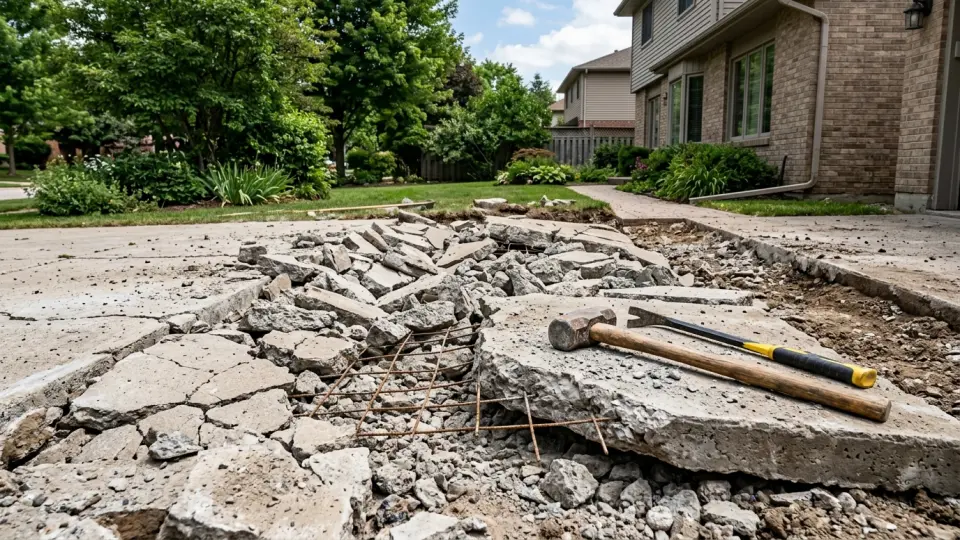
1. The Concrete Weight Formula: Math Every Homeowner Needs
To avoid costly surprises at the disposal scale, you must determine two values before picking up a sledgehammer: in-place solid volume and demolished loose weight.
The Density of Concrete
Standard cured residential concrete (typically 3,000 to 4,000 PSI mix) weighs approximately 145 to 150 pounds per cubic foot, which equals roughly 4,000 pounds (2.0 short tons) per solid cubic yard.
Step-by-Step Calculation Formula
- Measure Length and Width: Measure the dimensions of the slab in feet (e.g., 20 feet long by 10 feet wide = 200 square feet).
- Measure Slab Thickness: Determine thickness in inches. Most standard East Texas residential patios and sidewalks are 4 inches thick (0.33 feet). Heavy-duty driveways designed for trucks and RVs are typically 5 to 6 inches thick (0.42 to 0.50 feet).
- Calculate Cubic Feet: Multiply Length × Width × Thickness in feet. (Example: 20 × 10 × 0.33 = 66 cubic feet).
- Convert to Cubic Yards: Divide total cubic feet by 27. (66 ÷ 27 = 2.44 cubic yards).
- Calculate Total Weight: Multiply cubic yards by 4,050 lbs. (2.44 × 4,050 = 9,882 lbs = 4.94 tons).
When solid concrete is shattered with jackhammers or hydraulic breakers, air voids form between the jagged chunks. Demolished rubble expands by approximately 30% to 50% in physical volume. While 2.5 cubic yards of solid slab turns into roughly 3.5 cubic yards of loose rubble in the container, the total physical weight remains identical.
2. Slab Size vs. Estimated Weight Reference Chart
Use this reference chart based on standard 4-inch and 6-inch residential concrete pours across Gregg County:
| Project Type & Dimensions | Area (Sq Ft) | Thickness | Solid Volume (Cu Yds) | Estimated Weight (Tons) | Recommended Disposal Setup |
|---|---|---|---|---|---|
| Small Front Porch / Sidewalk (5' × 12') | 60 sq ft | 4 inches | 0.74 cu yds | 1.5 Tons (3,000 lbs) | 10-Yard Low-Profile Dumpster |
| Standard Backyard Patio (10' × 15') | 150 sq ft | 4 inches | 1.85 cu yds | 3.75 Tons (7,500 lbs) | 10-Yard Heavy Container (Single Load) |
| Large Patio or 1-Car Carport (12' × 24') | 288 sq ft | 4 inches | 3.55 cu yds | 7.2 Tons (14,400 lbs) | 10-Yard Heavy Container (Filled to fill line) |
| Standard 2-Car Driveway Approach (18' × 30') | 540 sq ft | 5 inches | 8.33 cu yds | 16.8 Tons (33,700 lbs) | Multiple 10-Yard Swaps (2 to 3 Hauls) |
| Heavy RV Parking Pad (14' × 40') | 560 sq ft | 6 inches | 10.37 cu yds | 21.0 Tons (42,000 lbs) | Scheduled 10-Yard Swap Schedule |
3. Why You Cannot Use a 20, 30, or 40-Yard Dumpster for Concrete
Customers frequently ask: "Why can't I just order your large 30-yard or 40-yard dumpster so I can fit the entire driveway in one single haul?"
The reason comes down to physics, equipment engineering, and state highway law:
1. Texas DOT Highway Legal Gross Weight Limits
Under Texas Department of Transportation (TxDOT) regulations, commercial three-axle roll-off trucks have a strict maximum legal gross vehicle weight rating (GVWR) of 54,000 to 66,000 pounds. When subtracting the empty weight of the truck itself (approx. 28,000 lbs) and the heavy steel container (approx. 6,000 to 9,000 lbs), the legal payload capacity of any roll-off truck is limited to approximately 10 to 12 tons (20,000 to 24,000 lbs).
2. Winch Hoist Capacity & Frame Safety
If a customer filled a 30-yard container to the brim with concrete, the total load would weigh over 60 tons (120,000 lbs). No roll-off truck winch in the industry could lift that box off the ground without shearing hydraulic lines, bending frame rails, or blowing out rear tires.
This is why the waste industry utilizes low-profile 10-yard roll-off dumpsters for concrete, dirt, rock, and brick. Low-profile containers feature 3.5-foot side walls that allow easy wheelbarrow dumping over the side, and physically limit volume so the container cannot be loaded past DOT legal road limits when loaded to the water level rim.
4. Practical Demolition Techniques & Tools
Successfully executing a concrete tear-out requires the right mechanical leverage:
Sledgehammer vs. Electric Jackhammer vs. Mini Excavator
- Sledgehammer (10–12 lb): Effective only for small 3.5-to-4 inch slabs with hollow gravel bases underneath. Pro-tip: Dig out 6 inches of dirt from underneath the slab edge with a pickaxe before striking. Concrete breaks in tension, not compression; striking unsupported slab edges shatters them instantly.
- Electric Demolition Hammer (60–70 lb Breaker): The gold standard for DIY patio demolition. Renting a 60-lb breaker from an East Texas equipment rental desk makes quick work of 4-inch patios without requiring heavy machinery on your lawn.
- Mini Skid Steer with Hydraulic Breaker: Essential for full driveway tear-outs over 400 square feet. A compact track loader equipped with a breaker breaks the slab, and a 4-in-1 bucket loads rubble directly through the dumpster’s rear walk-in door in hours.
Handling Steel Wire Mesh and Rebar
Most modern concrete driveways contain embedded 6x6 welded wire mesh or 3/8-inch (#3) steel rebar. When concrete shatters, the chunks will remain linked together by the steel grid. Keep an angle grinder with metal cut-off wheels or heavy 24-inch bolt cutters on hand to snip reinforcement wires as you break the slab apart.
5. City of Longview Permits & Concrete Recycling
Before breaking ground, consider local municipal and environmental requirements:
Driveway Approach & City Right-of-Way
If your tear-out extends past your property line to the public street curb (the "driveway approach" or apron), the City of Longview Public Works Department requires a right-of-way permit and inspection before replacing the curb cut. Always verify property boundaries and call 811 (Texas811) at least 48 business hours prior to digging to locate underground gas, water, and fiber lines.
Concrete Recycling vs. Landfill Fees
Dump fees for mixed demolition waste at municipal landfills can quickly add up based on tonnage. However, clean crushed concrete can often be processed at East Texas aggregate recycling yards into "recycled crushed concrete base" (flex base) for road beds. By keeping your container free of wood, plastic, and root trash, you ensure the rubble is eligible for beneficial reuse rather than occupying precious landfill space.
Frequently Asked Questions
Why can't I put concrete in a 20, 30, or 40-yard dumpster?
Concrete weighs approximately 4,000 lbs (2 tons) per cubic yard. If you filled a 30-yard dumpster with concrete, it would weigh 60 tons (120,000 lbs). Roll-off truck hydraulic winches cannot lift that much weight, and Texas Department of Transportation (TxDOT) highway gross vehicle weight limits strictly prohibit hauling it. For heavy materials, a dedicated low-profile 10-yard container must be used.
How much does a 4-inch concrete slab weigh per square foot?
A standard 4-inch thick residential concrete slab weighs approximately 45 to 50 pounds per square foot. That means a 10x10 ft patio (100 sq ft) weighs roughly 4,500 to 5,000 lbs (approx. 2.3 to 2.5 tons).
Can I mix dirt, brick, and gravel with the demolished concrete?
Yes, clean inert masonry materials like brick, concrete pavers, cured mortar, and base gravel can be mixed in our 10-yard heavy material container. However, do not mix organic tree root debris, general trash, or lumber with clean heavy masonry if recycling clean fill.
What should I do with steel wire mesh or rebar inside the concrete?
Concrete with embedded reinforcement mesh or #3/#4 rebar is accepted in our heavy-debris containers. Cut protruding rebar flush with an angle grinder or bolt cutters so chunks stack flat and do not protrude above the top water-level rim of the container.