roofing dumpster rental longview homeowners and roofing crews need can keep a roof replacement organized from tear off to final cleanup.
Greater Longview Dumpster provides containers for shingle tear offs, reroofing projects, roofing debris, and other approved materials in Longview and verified nearby areas.
A roof replacement creates a concentrated waste load. Shingles, underlayment, felt, damaged wood, and other debris can fill a container quickly.
The right dumpster depends on roof size, material, number of layers, available weight, and the space at your property.
That activity means roofing cleanup is not a rare project in the local market.
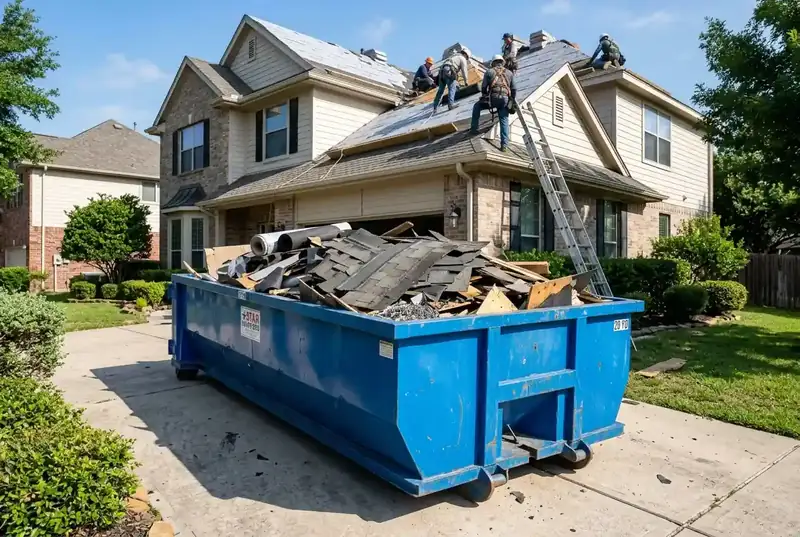
Shingles are heavy compared with many household materials.
That makes weight just as important as container volume.
A roofing dumpster may still have visible space when the load reaches its allowed weight. This is why roof area, shingle type, and existing layers matter when choosing a container.
For asphalt shingles, estimate the roof's square footage before ordering. Then consider whether the crew will remove one layer or several.
1 Roofing Square = 100 Square Feet of Roof Deck. Architectural shingles weigh ~350–420 lbs/square; 3-Tab shingles weigh ~220–250 lbs/square.
Engineered for single-story ranch homes, detached garages, carports, and single-layer 3-tab shingle replacements.
The most requested roofing roll-off in East Texas. Handles full suburban roof tear-offs with architectural shingles + felt.
High-capacity container for large footprint commercial roofs, structural decking tear-out, and heavy commercial underlayment.
Start with four details:
| Roofing Detail | Why It Matters |
|---|---|
| Roof size | Determines the amount of debris |
| Number of layers | More layers create more waste |
| Roofing material | Some materials weigh much more |
| Container weight allowance | Prevents an unexpected overweight load |
A roofing contractor can usually provide the roof size and material before the project begins.
Share those details with Greater Longview Dumpster before booking.
A 20 yard container can be a practical option for many residential roofing projects when the debris volume and weight fit the container's limits.
A 20 yard container may work well for a standard asphalt shingle replacement. Larger roofs, multiple layers, or heavier materials may require another option.
Do not choose by roof size alone.
A 15 yard container can suit smaller roofing projects when the expected debris stays within its capacity and weight allowance.
This option may fit a smaller home or a limited tear off.
Check the expected load before delivery.
A 30 yard container provides more room for larger roofing projects.
More volume does not remove weight limits.
Heavy roofing debris can still exceed the allowed tonnage.
A roof tear off creates more than shingles.
Crews may remove underlayment, flashing, damaged lumber, vents, insulation, and other material.
Separate anything that your dumpster provider does not accept before loading.
Keep debris inside the container. Do not allow shingles or loose material to extend above the top.
Give the rental company the approximate roof area, roofing material, number of layers, and expected delivery date.
Also explain where the container will sit.
A driveway near a tight residential street may need a different delivery plan than a larger jobsite.
Asphalt shingles make up much of the waste from common residential reroofing projects.
Before the first shingle comes off, confirm how your provider handles roofing debris.
Do not assume that every dumpster accepts every roofing material.
We accept clean asphalt shingle tear-offs, organic felt paper, synthetic underlayment, drip edges, ridge vents, flashing, and roofing fasteners in all residential containers. Loads must remain level with the container top rim for safe tarping and transport.
Longview's landfill also has specific restrictions for certain materials. Pine Hill Landfill is located near Highway 31 and FM 1252. The city states that loads must be tarped during transport to prevent materials from spilling onto highways.
Good shingle disposal starts with proper loading.
Keep shingles inside the container.
Spread the load instead of creating one heavy pile in one area.
Do not mix restricted materials with accepted roofing waste.
For mixed roofing debris, ask about disposal rules before work begins.
Speak straight to our East Texas dispatch desk. We match your roof square count to the exact right container and lock in today's flat rate in under 90 seconds.
Roofing debris removal should be planned before tear off starts.
Place the container close enough for efficient loading. Keep it away from areas that must remain open for workers, equipment, and customers.
For residential jobs, protect access to garages and driveways where possible.
For commercial projects, consider employee parking, deliveries, pedestrian traffic, and customer access.
Result: Crew pitched shingles directly over eaves into the roll-off container. Work was completed in 1.5 days with zero driveway tire ruts or surface gouges, and the container was hauled to Pine Hill Landfill within 3 hours of final roof completion.
Tile and slate roofing need more planning than standard asphalt shingles.
They are much denser materials.
A container that works well for asphalt shingles may not be suitable for the same roof covered with tile or slate.
For a tile and slate roofing dumpster longview project, confirm the weight allowance before ordering.
Concrete tile, Spanish clay tile, and slate can weigh between 800 to 1,500 lbs per square - up to 4 times the weight of standard shingles! We allocate our heavy-duty 10-yard or 15-yard low-profile containers with mandatory fill-level lines to ensure safe road hauling and avoid state axle-weight penalties.
If the project includes concrete tile, clay tile, slate, or other heavy roofing materials, provide that information when requesting a quote.
Weight becomes a major factor when a roof produces dense debris.
A larger container gives you more volume. It does not automatically give you unlimited weight.
The price depends on the container, rental period, included tonnage, delivery, and any extra weight or additional days.
Compare the complete rental terms rather than only the starting price.
For a roofing dumpster near Longview, location affects more than travel distance.
The truck also needs a safe route to the property.
Major corridors such as Loop 281, US 80, Judson Road, Eastman Road, and Gilmer Road connect many residential and commercial areas.
Tell us about narrow drives, gates, steep approaches, overhead branches, and other access issues before delivery.
A driveway can be a practical location when the surface and access are suitable.
Concrete and asphalt can respond differently to heavy equipment and concentrated loads.
Shingles exert concentrated downward pressure. Before setting down any container, our professional drivers lay heavy wooden boards beneath the roll-off contact rollers. This distributes the tonnage and shields your driveway from cracking, gouging, and asphalt scuffs.
Move vehicles before delivery. Keep the drop zone clear.
If the property has limited access, discuss placement before booking.
A private driveway, suitable construction area, or approved commercial surface may work.
Placement on public right of way can involve different requirements.
Longview's Development Services department handles building and development requirements. Its permit system is available for construction permitting, inspections, and contractor registration.
The city also provides separate right of way construction permit information.
If the container sits entirely on your private property or residential driveway, no city permit is required. If a tight residential street forces container placement along the curb or public street in Longview, our dispatch team coordinates with you regarding city Right-of-Way permitting requirements.
Before the truck arrives:
For a busy roofing site, planning the container location early can prevent lost loading time.
Allowed materials depend on your rental and disposal policy.
Possible roofing debris may include asphalt shingles, underlayment, felt, and other approved roofing materials.
Restricted materials must stay out of the container.
Never assume that a material is accepted because another dumpster company allows it.
Tell us the roof size, roofing material, number of layers, delivery location, and preferred date.
Those details help us recommend a suitable container and explain the weight allowance before the tear off starts.
Whether the project is near Loop 281, Judson Road, Gilmer Road, or another Longview neighborhood, good planning keeps shingles and other debris contained.