Across Gregg, Upshur, Harrison, and Rusk counties, thousands of rural homesteads and older city lots have aging structures that have reached the end of their useful life: rotted backyard storage sheds, storm-damaged pole barns, collapsing detached garages, or vacant 1980s single-wide mobile homes. Leaving a dilapidated structure standing invites pests, lowers property value, and creates liability hazards—yet hiring a turnkey demolition company can easily cost $4,500 to $10,000+.
By renting a heavy-duty Demolition Roll-Off Dumpster directly from Greater Longview Dumpster and tackling the tear-down with a rented skid steer, mini-excavator, or a weekend crew, East Texas property owners routinely save 50% to 65% on total demolition costs. Here is your step-by-step guide to choosing the right shed and mobile home demolition dumpster, navigating Longview permits, and loading debris for maximum compaction.
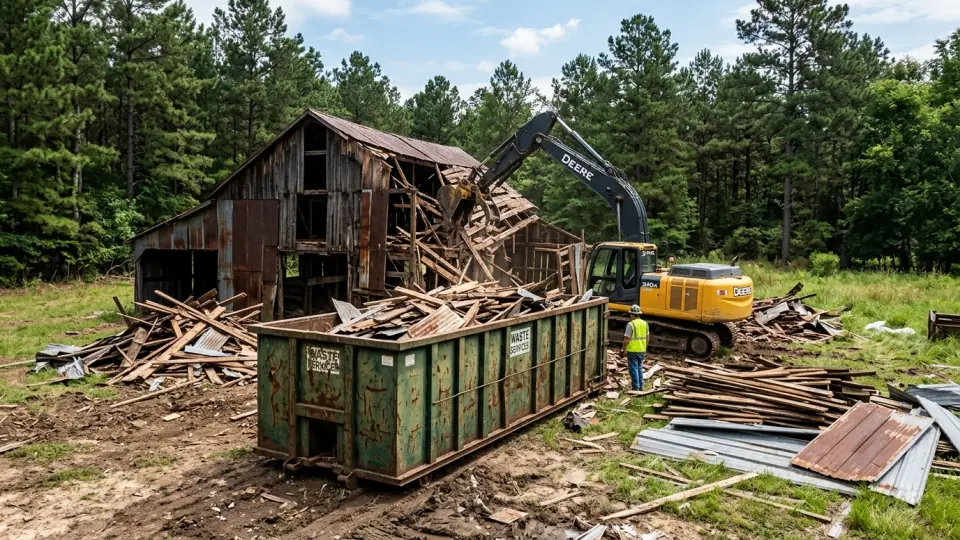
1. Dumpster Sizing Matrix: Sheds, Garages, Barns & Mobile Homes
The biggest mistake DIY demolishers make is estimating container size based on the standing volume of a building rather than its crushed volume. A 10x12 shed encloses 960 cubic feet (35 cubic yards) of air, but once the walls are knocked flat, it compacts down to less than 12 cubic yards of actual wood and shingle debris.
| Structure Type & Footprint | Recommended Container(s) | Est. Debris Weight | Typical Rental Budget |
|---|---|---|---|
| Small Storage Shed (8x10 to 10x12) Wood or T1-11 siding, shingle roof |
15-Yard or 20-Yard Roll-Off | 1.0 – 1.8 Tons | $405 – $445 |
| Large Workshop / 1-Car Garage (12x24 to 16x20) Wood framing, siding, drywall, shingles |
20-Yard or 30-Yard Roll-Off | 2.2 – 3.5 Tons | $445 – $545 |
| 2-Car Detached Garage or Pole Barn (24x24 to 30x40) Heavy rafters, trusses, tin or shingle roof |
30-Yard or 40-Yard Roll-Off (+ 10-Yd if breaking concrete slab) |
3.5 – 6.0 Tons | $545 – $645+ |
| Single-Wide Mobile Home (14x60 to 16x80) Crushed walls, flooring, insulation, panelling |
Two 30-Yard or 40-Yard Roll-Offs (Recycle steel frame separately) |
5.0 – 8.5 Tons | $1,090 – $1,290 |
| Double-Wide Manufactured Home (24x60 to 28x70) Full structure tear-down & interior contents |
Three 30-Yard or 40-Yard Roll-Offs | 9.0 – 14.0 Tons | Custom Swap-Out Rate |
2. How to Demolish a Mobile Home for Minimum Dumpster Cost
Mobile home tear-downs in rural Gregg, Upshur (Gilmer/Diana), and Harrison (Hallsville/Marshall) counties are among our most frequent demolition dumpster requests. To keep your disposal bill as low as possible, follow the three-phase contractor method:
- Strip & Recycle the Metal First: Aluminum exterior siding, corrugated metal skirting, copper wiring, and the massive twin steel I-beam undercarriage frame should never go into your landfill dumpster. Local East Texas scrap yards pay cash per hundredweight for clean structural steel and aluminum, saving you thousands of pounds in landfill tonnage fees.
- Remove Prohibited Appliances & Hazmat: Before crunching the structure with an excavator, pull out refrigerators, window A/C units (which contain Freon), water heaters, old tires on the axles, and paint cans. (See our Longview Hazardous Waste Disposal Guide for where to take restricted items.)
- Track-Pack or Bucket-Crush Wood & Insulation: Use your tractor bucket, skid steer, or mini-excavator thumb to break 2x4 walls, particleboard subfloors, and roof trusses into flat sections before loading them into your 30-Yard or 40-Yard Dumpster.
Some rural property owners assume they can push an old barn or mobile home into a brush pile and burn it. Under TCEQ Outdoor Burning Rules (30 TAC §111.201–221), burning any structure, treated wood, painted lumber, composition shingles, vinyl siding, or fiberglass insulation is a state environmental violation—even outside city limits—carrying fines up to $10,000+ when dark smoke is reported. Renting a roll-off container keeps your land clearing 100% legal and leaves your soil uncontaminated by nails and toxic ash.
3. Permits, Utility Disconnects & Pre-1980 Asbestos Rules
Before knocking down any structure in the Greater Longview area, verify these three regulatory checkpoints:
- City of Longview Demolition Permits: If your property is inside Longview city limits (Development Services, 410 S. High St), tearing down a primary structure, mobile home, or wired/plumbed outbuilding requires a demolition permit. Small portable backyard sheds (under 120–200 sq ft without permanent utilities) generally do not require a demolition permit, though you should always call 811 before digging up foundations.
- Utility Disconnect Letters: Never tear into a mobile home, garage, or barn until SWEPCO/Upshur Rural Electric has pulled the electric meter, natural gas or propane lines are locked and capped at the tank/riser, and city sewer lines are properly plugged to prevent rainwater and dirt from entering the municipal main.
- Concrete Foundation Slabs: If your shed or garage sits on a 4-inch poured concrete slab that you also plan to break up, do not mix heavy concrete chunks on top of bulky wood framing in a 30-yard container. Order a dedicated low-wall 10-Yard or 12-Yard Heavy Debris Dumpster specifically for the concrete slab (read our Concrete & Heavy Dirt Dumpster Guide).
Frequently Asked Questions: Shed & Mobile Home Demolition
What size dumpster do I need to tear down a shed or barn in Longview?
For a standard 10x12 or 12x16 backyard storage shed, a single 15-yard or 20-yard roll-off dumpster easily holds all framing, siding, and roofing materials. For larger 20x30 pole barns or detached two-car garages, a 30-yard dumpster (or a 30-yard for lumber plus a 10-yard for the concrete slab) is recommended.
How many dumpsters does it take to demolish a single-wide or double-wide mobile home?
A 14x70 single-wide mobile home typically requires one to two 30-yard or 40-yard roll-off dumpsters once crushed and compacted with an excavator or skid steer, assuming the steel I-beam chassis and axles are separated for scrap metal recycling. A double-wide mobile home generally requires two to three 30-yard or 40-yard containers.
Do I need a demolition permit to tear down a shed or mobile home in Longview, TX?
Inside the City of Longview municipal limits, tearing down a permanent residential structure, mobile home, or large accessory building with utility connections requires a City of Longview Demolition Permit and utility disconnect verification (water, sewer cap, electric, and gas). In rural unincorporated areas of Gregg, Upshur, and Harrison counties, county demolition permits are generally not required for private residential outbuildings, though TCEQ rules strictly prohibit open burning of demolition debris.
Can I burn an old barn or mobile home on rural land in East Texas instead of renting a dumpster?
No. Under Texas Commission on Environmental Quality (TCEQ) Outdoor Burning Rules (30 TAC Chapter 111), burning treated lumber, painted wood, asphalt roof shingles, insulation, vinyl siding, plastics, or mobile home structures is strictly illegal across all Texas counties—even on rural agricultural acreage—and carries heavy state fines.