Kitchen Remodel Waste: How Much Debris Will You Really Generate?
Tearing out old cabinets, quartz counters, and subfloors creates surprisingly massive piles of demo debris. Here is the exact breakdown in cubic yards and tonnage so you rent the right roll-off dumpster without paying overage penalties in East Texas.
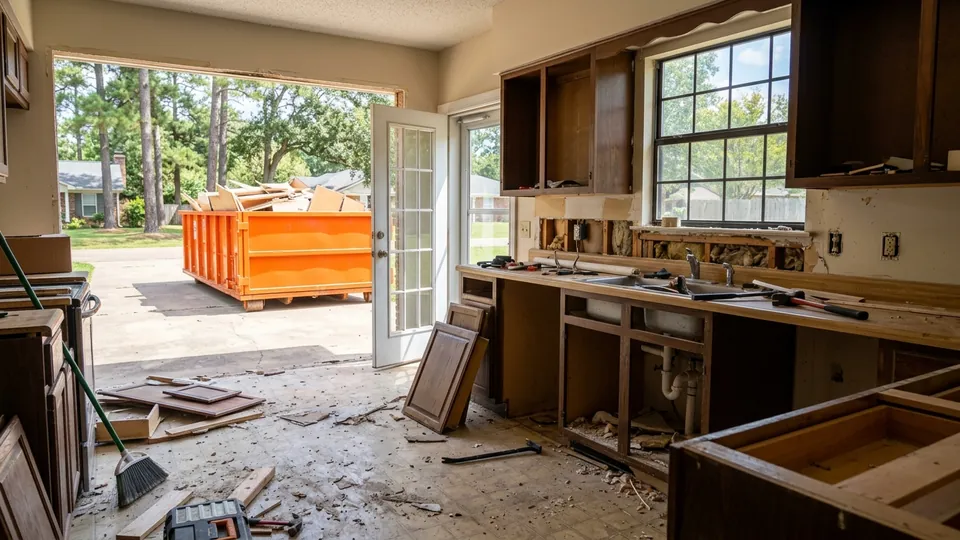
Underestimating kitchen demolition waste is the single most common mistake homeowners make during home renovations. A standard residential kitchen remodel generates between 3 to 8 cubic yards of debris, tipping the scales at 1.5 to 3.5 tons (3,000 to 7,000 lbs).
Minor Refresh (100 sq ft): 2–3 cubic yards (~1.0 ton / 2,000 lbs)
Standard Full Gut (150–200 sq ft): 4–6 cubic yards (~2.2 tons / 4,400 lbs)
Major Layout Change / Wall Removal (250+ sq ft): 7–10 cubic yards (~3.5 tons / 7,000 lbs)
Recommended Dumpster: A 20-Yard Roll-Off for full tear-outs, or a 15-Yard Dumpster for cabinet-only updates.
Kitchen Debris Estimates by Project Scope
Debris volume depends on whether you are simply swapping surfaces or tearing back to the wall studs. Review this quick sizing benchmark based on hundreds of East Texas remodels coordinated through our Longview dispatch:
| Renovation Scope | Average Volume | Total Weight | Best Roll-Off Match |
|---|---|---|---|
| Surface Refresh Laminate tops, sink, cabinet doors |
2–3 cu yds | 1,200–2,000 lbs | 10 or 15-Yard |
| Standard Kitchen Gut Cabinets, granite tops, appliances, tile |
4–6 cu yds | 3,500–5,500 lbs | 20-Yard Container |
| Complete Wall Demo Studs, drywall, island, subfloor, framing |
7–10 cu yds | 6,000–9,000 lbs | 20 or 30-Yard |
Weight vs. Volume: Where Does Kitchen Debris Hide?
Unlike bulky bedroom furniture, kitchen debris combines awkward bulk with extreme density. When demo crews dismantle a kitchen, the weight concentrates across six primary materials:
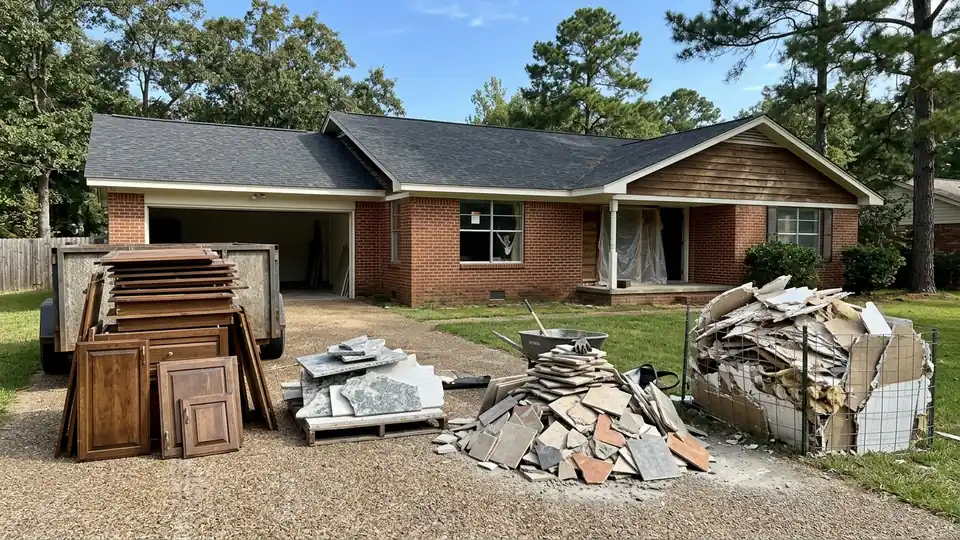
- Cabinet Boxes & Islands (400–800 lbs): Solid wood and particleboard take up massive boxy volume inside a container unless smashed flat with a sledgehammer.
- Granite, Quartz & Laminate Counters (400–1,200 lbs): Natural stone tops weigh 18 to 22 lbs per square foot. A 40-square-foot island top alone exceeds 800 lbs.
- Tile Flooring & Mortar Bed (800–2,200 lbs): Tile is the heaviest debris in any kitchen. Ceramic tile with mortar underlayment averages 4 to 6 lbs per square foot.
- Sheetrock & Backer Board (600–1,500 lbs): Standard 1/2-inch drywall weighs approximately 1.5 lbs per square foot. Tearing down a 12x15 kitchen's walls easily adds 1,000 lbs.
- Old Appliances (300–700 lbs): Ranges, built-in dishwashers, and range hoods add quick bulk. Review our acceptable materials guide before loading refrigerators.
- Subfloor & Underlayment (300–600 lbs): Water-damaged plywood or glued linoleum subflooring peeled up prior to new hardwood installation.
Never toss intact cabinet boxes into your dumpster. Spending 20 minutes with a pry bar flat-packing cabinet carcasses can cut your total debris volume by nearly 40%, keeping your load below the container's top fill line.
Why Municipal Curbside Pickups Will Reject Kitchen Waste
In Longview and surrounding East Texas municipalities, municipal bulky sanitation routes maintain strict disposal limits. Under City of Longview Sanitation Guidelines, residential curbside collections enforce an 8-cubic-yard maximum and strictly exclude contractor renovation trash, sheetrock, brick, and tile. Hauling five pickup truck loads to the Pine Hill Landfill means paying multiple gate fees and spending hours in line. Renting a dedicated residential roll-off dumpster with driveway protection boards is the most cost-efficient, legal path.