For independent landlords, multi-family investors, and residential property managers across Longview, Tyler, Kilgore, and Gregg County, few operational events cause more stress and cash flow drag than an unexpected tenant eviction or an abandoned rental turnover. Every single day a rental home or apartment sits vacant filled with trash, discarded furniture, and left-behind clutter is a day of lost rental income, accruing mortgage interest, and mounting holding costs.
When an eviction reaches its final legal conclusion—or when a tenant breaks their lease in the middle of the night leaving a unit packed wall-to-wall—the goal is simple: clear the unit swiftly, comply strictly with Texas property laws, and restore the rental to market-ready condition in under 72 hours. Doing so requires understanding Texas eviction statutes, coordinating with local Gregg County constables, and staging the right move-out cleanout dumpster to eliminate disposal bottlenecks.
Here is the definitive East Texas landlord and property manager playbook for navigating eviction cleanouts and rapid tenant turnover logistics safely and cost-effectively.
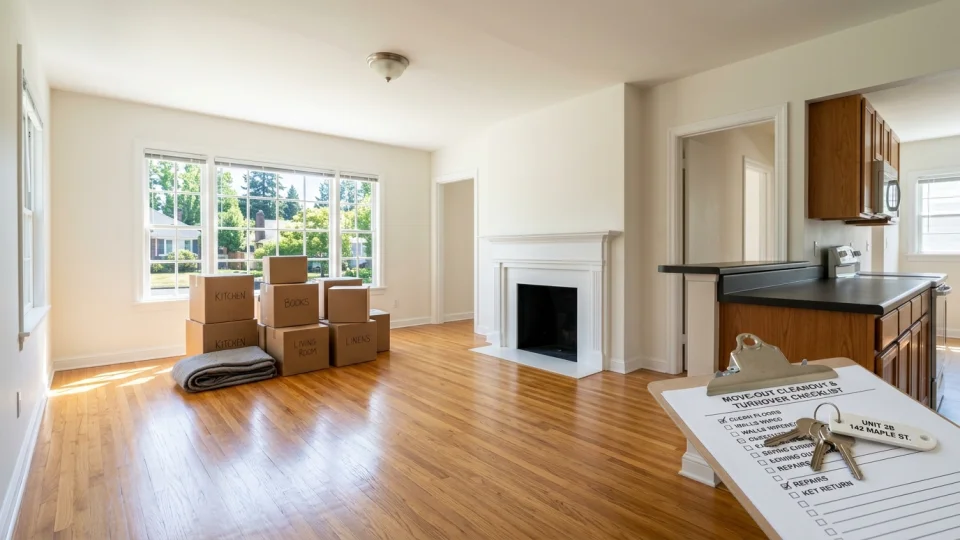
1. Texas Eviction Law & The Writ of Possession Protocol
Before touching a single cardboard box or tossing a broken chair, landlords in Gregg and Smith Counties must adhere strictly to the Texas Property Code (specifically Chapter 24). Mishandling tenant property—even when a tenant is months behind on rent—can open property owners to severe civil liability and claims of unlawful conversion.
Understanding Texas Property Code § 24.0061
Under Texas law, landlords cannot perform "self-help" evictions. You cannot change locks, shut off utilities, or throw tenant property onto the street on your own authority. The lawful process requires:
- Notice to Vacate: Serving standard formal notice (typically 3 days unless the lease contract dictates otherwise).
- Filing for Eviction: Filing in the appropriate Justice of the Peace (JP) precinct (such as Gregg County Precinct 1, 2, 3, or 4).
- Obtaining the Judgment: Receiving a court judgment for possession after the JP hearing.
- Writ of Possession: If the tenant does not appeal or vacate within the statutory 6-day waiting window, the landlord pays for the court clerk to issue a Writ of Possession.
Under Texas law, the actual execution of a Writ of Possession must be performed by a county constable or deputy sheriff. The officer will post a 24-hour warning notice on the tenant's front door before executing the writ. On the scheduled execution morning, the officer arrives to secure the property, remove any occupants, and oversee the removal of belongings.
Curb Set-Out vs. Direct Trash Disposal
When executing a Writ of Possession, Texas statute specifies that the officer oversees the removal of the tenant's personal property from the dwelling to a designated location outside, typically near the street curb or property line without blocking public sidewalks or traffic lanes.
However, once the writ is formally executed and the tenant fails to retrieve their items within the statutory window, or when an abandoned property clause triggers under your lease agreement, the landlord is left with the debris. Municipalities like the City of Longview do not allow massive mountains of tenant belongings to sit on street curbs indefinitely. Gregg County code enforcement will issue citations if bulky piles obstruct sidewalks or create neighborhood health hazards. That is where scheduling an on-site residential roll-off dumpster becomes essential.
2. Dumpster Sizing for Rental Turnovers and Evictions
Underestimating the volume of trash left behind by an evicted or departing tenant is one of the most common mistakes East Texas landlords make. A unit might only look moderately messy at first glance, but closets, attic access panels, crawl spaces, and exterior storage sheds frequently hold twice the debris visible in the main rooms.
| Rental Property Type | Typical Clutter Level | Recommended Dumpster | Payload & Volume Specs |
|---|---|---|---|
| 1-Bedroom Apartment / Efficiency | Light to Moderate Trash, boxes, clothing piles | 10-Yard Roll-Off | 2.0 Tons included • ~3 to 4 pickup truck beds |
| 2-Bedroom Duplex or Townhome | Abandoned furniture, mattress, kitchen debris | 15-Yard Roll-Off | 2.5 Tons included • ~5 to 6 pickup truck beds |
| 3-Bedroom Single-Family Home | Heavy hoard, broken beds, living room sets | 20-Yard Roll-Off | 3.0 Tons included • ~7 to 8 pickup truck beds |
| Full Property Cleanout + Garage/Shed | Severe tenant hoarding, yard debris, carpet tear-out | 30-Yard Roll-Off | 4.0 Tons included • ~10 to 12 pickup truck beds |
For most standard Longview rental single-family homes (especially in neighborhoods like Pine Tree, Spring Hill, and White Oak), our 20-yard roll-off container is the property manager's favorite choice. Measuring 22 feet long with 4.5-foot side walls, it easily holds bulky sectional couches, dining sets, box springs, and dozens of heavy contractor trash bags without overflowing over the top rim.
3. The 72-Hour Rapid Turnover Action Plan
Vacancies drain rental profits. To minimize downtime, professional property managers follow a disciplined, chronologically staged cleanout schedule:
Hour 0 to 12: Staging & Photographic Documentation
- Thorough Photo & Video Inspection: Before touching anything, record high-resolution, timestamped video and photos of every single room, closet, ceiling, and appliance. This is your primary defense in court if the tenant disputes deposit deductions or claims property damage.
- Container Placement: Position the roll-off container on the rental driveway close to the primary entrance. Greater Longview Dumpster places wooden driveway protection boards beneath every steel roller to prevent driveway cracks and oil scuffs.
- Ventilation & Safety: Open all windows to air out stagnant odors, verify that smoke detectors are functioning, and supply your cleanout crew with thick 3 mil contractor bags, puncture-proof work gloves, and protective eyewear.
Hour 12 to 36: Systematic Trash Removal (Triage Protocol)
- Work from Back to Front: Begin clearing in the master bedroom and rear bathrooms, moving systematically toward the front door or garage exit where the dumpster is positioned.
- Utilize Walk-In Dumpster Doors: Instead of hoisting heavy dressers and couches over high steel dumpster walls, open the container’s rear swing gate and walk bulky items directly inside. Stack flat items along the sides to optimize fill efficiency.
- Carpet & Pad Pull: In severe cases involving pet urine, heavy smoke damage, or flooding, rip up soiled carpet and tack strips immediately. Stash rolled carpet into the container so subfloors can begin drying and deodorizing.
Hour 36 to 60: Deep Cleaning, Sanitization & Repairs
- Ozone & Odor Remediation: Run commercial ozone generators or hydroxyl machines to neutralize deeply embedded tobacco, pet, or food odors.
- Plumbing & HVAC Check: Replace HVAC filters immediately, test all water fixtures for hidden leaks or tenant tampering, and check toilet flappers to prevent high utility bills.
- Patch & Paint: Spackle wall anchors, fill door-knob holes, and apply a fresh coat of neutral interior paint across high-traffic living areas.
Hour 60 to 72: Final Punch-Out & Re-Listing
- Final Punch List: Test every lock, replace light bulbs with matching LED temperatures, and install new smoke detector 9V batteries.
- Dumpster Haul-Away: Call our local dispatch desk at (903) 861-8979 for prompt container haul-away. Your driveway is left completely clean and ready for prospective tenant showings.
- Photography & Marketing: Capture bright, wide-angle listing photos while the unit is pristine and publish your listing on rental platforms.
4. Disposal Rules: Handling Prohibited & Hazardous Items
Departing tenants often leave behind hazardous chemicals, half-used paints, and damaged appliances that landfills and roll-off haulers cannot legally accept. Understanding these restrictions protects landlords from costly disposal fines:
Household trash, bagged clothes, broken furniture, mattresses, bed frames, drywall, sheetrock, carpeting, linoleum, wooden baseboards, non-Freon appliances (washing machines, dryers, ovens), bathroom vanities, and general clutter.
Wet liquid paints, motor oil, car batteries, gasoline containers, pressurized propane cylinders, chemicals, biological waste, and Freon-containing refrigeration equipment (refrigerators, freezers, window AC units). See our detailed guide on what can and cannot go in a dumpster for complete Gregg County disposal protocols.
5. Cost Breakdown: Roll-Off Rental vs. Junk Hauling Crew
When faced with a trashed rental property, landlords often debate between hiring a full-service two-man junk removal crew versus renting a dedicated roll-off dumpster and using in-house maintenance staff.
Full-service junk crews charge by fractional volume (e.g., $150 for a minimum load, reaching $600 to $900 for a single 12-foot trailer). A heavily cluttered 3-bedroom home often requires three to four trailer loads, quickly pushing your invoice past $1,800 to $2,500.
In contrast, renting a 20-yard roll-off container from Greater Longview Dumpster gives your maintenance crew 540 cubic feet of capacity, 3.0 tons of disposal weight, and up to 7 days on-site for a clear, flat-rate price. Even after paying your maintenance technicians or day laborers for a Saturday shift, renting a roll-off typically saves property owners 40% to 60% compared to third-party junk removal contractors.
Frequently Asked Questions
How does Texas law regulate abandoned tenant property during an eviction in Gregg County?
Under Texas Property Code Section 24.0061, once a Writ of Possession is executed by the county constable or sheriff, the officer directs the removal of tenant belongings to the curb or property boundary. Landlords cannot seize or sell belongings immediately without legal authorization, but abandoned trash and unsalvageable debris can be cleared once possession is officially returned.
What dumpster size is best for an apartment or rental home turnover cleanout?
For a 1 to 2-bedroom rental apartment or duplex with abandoned furniture, mattresses, and trash bags, a 15-yard dumpster is usually optimal. For a 3 to 4-bedroom single-family rental home packed with abandoned household goods, a 20-yard roll-off container provides the 540 cubic feet and 3-ton capacity needed to clear the property.
How quickly can Greater Longview Dumpster deliver a roll-off for an emergency turnover?
We provide same-day and next-day roll-off delivery across Longview, White Oak, Pine Tree, Spring Hill, Kilgore, and Tyler. If you have an eviction scheduled with Gregg County Precinct constables, you can coordinate delivery timing so the container is staged right when the writ is executed.
Can landlords dispose of abandoned mattresses, couches, and appliances in the dumpster?
Yes. Furniture, dressers, tables, and mattresses are fully accepted in our roll-off dumpsters. Non-Freon appliances like washing machines and dishwashers are also permitted. However, refrigerators, freezers, and AC units containing Freon must be professionally evacuated before disposal.