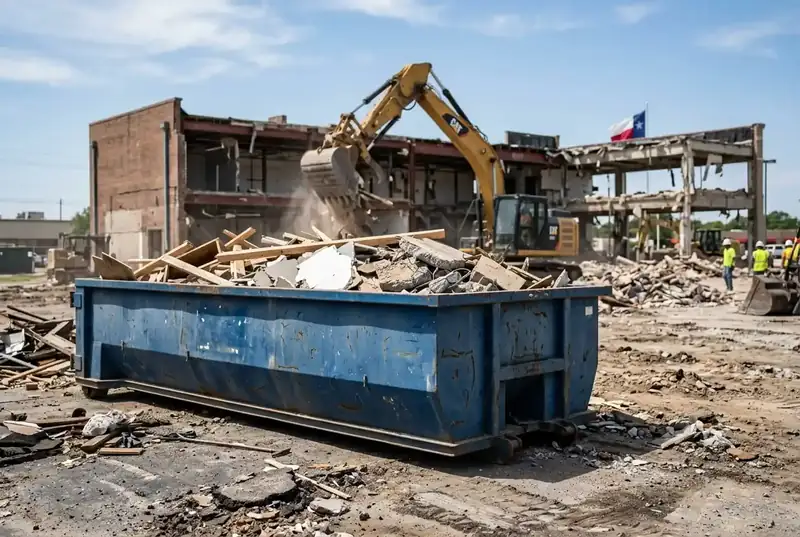
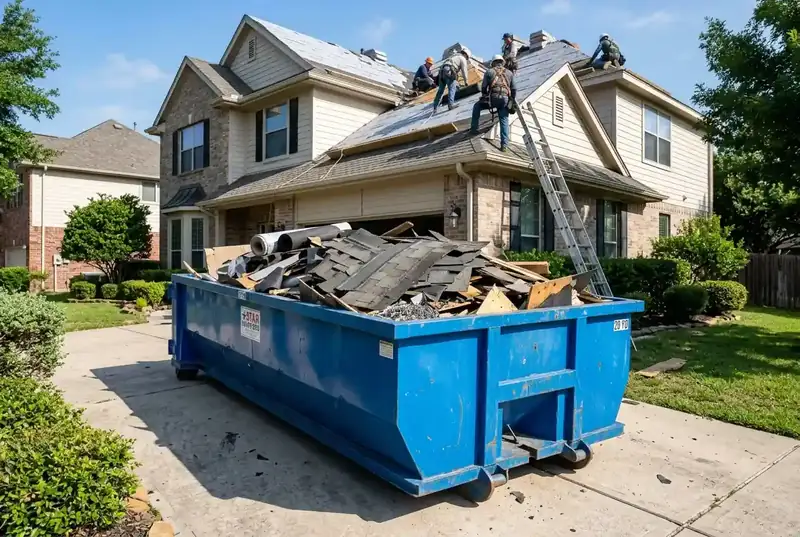
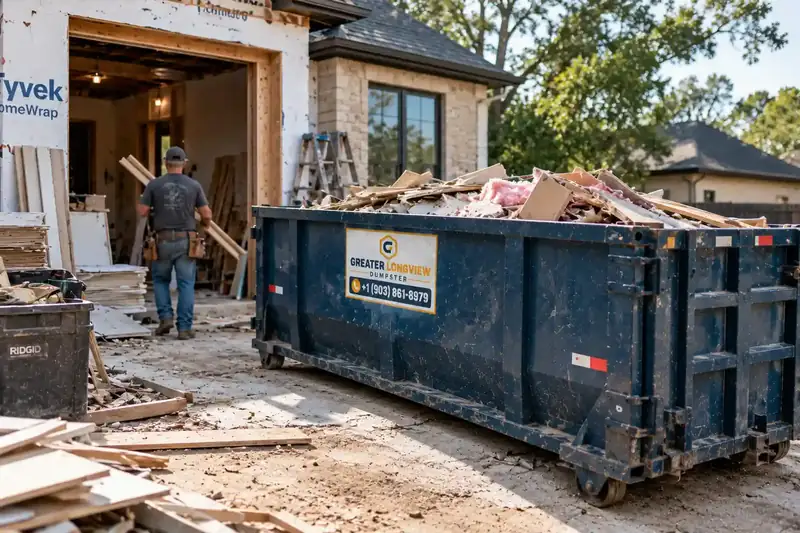
Construction dumpster rental Longview contractors need should keep debris contained without slowing the job.
Greater Longview Dumpster provides roll off containers for construction sites, commercial renovations, demolition work, roofing projects, and other large cleanup jobs in Longview.
The right container depends on your debris volume, material weight, jobsite access, and project schedule.
Tell us what you are removing, where the container will sit, and when you need delivery. We can then recommend a suitable option.
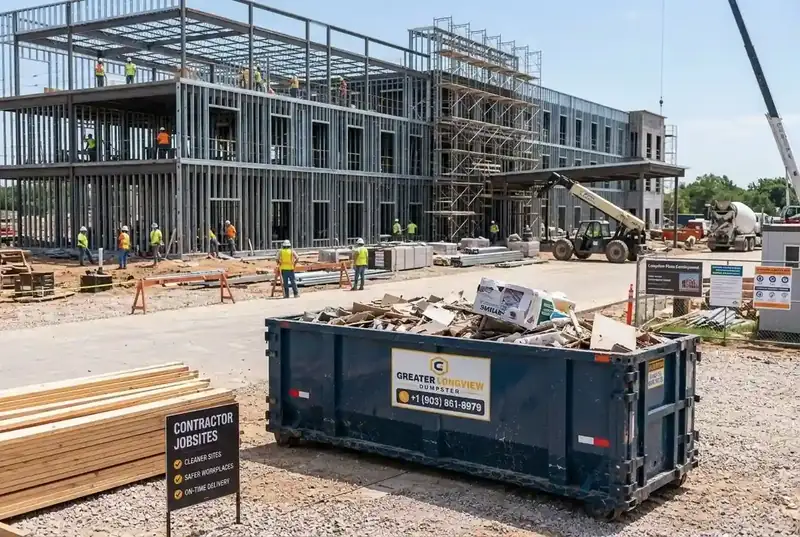
A busy jobsite needs a clear place for debris.
Wood, drywall, flooring, cabinets, packaging, roofing material, and demolition waste can quickly reduce usable workspace. A roll off container gives crews one controlled area for approved debris.
This matters on both residential construction sites and commercial projects.
| Project | Common Debris | Main Planning Issue |
|---|---|---|
| New construction | Wood, drywall, packaging | Ongoing volume |
| Remodeling | Cabinets, flooring, drywall | Mixed materials |
| Demolition | Wood, fixtures, masonry | Weight |
| Roofing | Shingles, roofing debris | Dense loads |
| Commercial renovation | Fixtures, flooring, construction debris | Access and scheduling |
Use your actual dumpster sizes and weight allowances to match your jobsite constraints.
Low walls allow easy over-the-side loading for dense demolition debris, small concrete slabs, plaster, and bath updates.
Optimal balance of compact site footprint and volume for single-room commercial retail remodels and flooring tear-outs.
Most requested by East Texas builders for whole-building framing scraps, siding, commercial roofing, and drywall scrap.
Tall 6-foot sidewalls engineered for high-bulk commercial construction, large structural demo, and multi-tenant renovations.
Start with the material and estimated volume.
A large pile does not always mean you need the largest container. Dense materials can reach the weight limit before the container looks full.
Give us the project type, approximate debris amount, and material list. That makes sizing more accurate.
Commercial dumpster pricing can depend on container size, rental period, included tonnage, extra weight, delivery location, and project requirements.
Your quote should clearly explain what is included.
Our Longview commercial contracts include upfront transparent flat-rate billing: 7 to 14 standard days included, upfront tonnage caps (2.0 to 4.5+ tons), professional delivery, and direct landfill haul-away.
Overweight proration is clearly stated at a fixed per-ton rate with verified scale tickets from Pine Hill Landfill. Zero hidden franchise fees, environmental surcharges, or unannounced fuel fees.
Clear pricing helps contractors protect their project budget.
For a small load, hauling debris yourself may work.
For an active construction project, repeated trips can take workers away from the job. You also need a suitable vehicle and a legal disposal option. Truck wear, trailer tire punctures, fuel costs, and hours lost in landfill transit reduce jobsite profitability.
A dumpster keeps the debris at the site while your crew works. Crews toss debris directly into the roll-off, maintaining a tidy, OSHA-compliant jobsite without diverting skilled trade hours away from productive builds.
Construction debris varies from one project to another.
A remodeling crew may remove cabinets and flooring. A framing crew may generate wood scraps. A demolition crew may handle much heavier material.
Concrete, brick, dirt, asphalt, tile, and similar materials can add weight quickly.
For inert masonry, asphalt, brick, or clean concrete, we require dedicated 10-yard or 15-yard low-sided containers filled no higher than the top rim. This guarantees safe hoist lifting by our winch trucks and prevents legal highway DOT axle-weight overages.
Do not assume that every container can handle every material. Check the weight and disposal rules before loading.
The size of the dumpster does not determine what you can dispose of.
Hazardous chemicals, certain liquids, asbestos, batteries, tires, refrigerants, and other restricted materials may need separate handling.
When a material is uncertain, ask before placing it in the container.
Commercial projects often involve tighter scheduling than residential work.
A restaurant renovation may need debris removed without blocking deliveries. A retail project may need the container away from customer traffic. An office renovation may have limited loading space.
Plan the dumpster around the site.
For recurring commercial projects or phased renovations across Longview, we establish dedicated trade accounts with scheduled swap-out routines.
Contractors need more than a container.
They need predictable delivery, clear weight rules, and pickup that fits the job schedule.
A full dumpster can take up valuable space. A late pickup can interfere with the next phase of work.
This real project information gives future customers a better idea of how your service works.
Speak straight to our East Texas dispatch desk. We match your commercial demolition or building debris to the right roll-off container and dispatch within 24 hours.
From initial dispatch call to final landfill tare weight receipt, our process protects your project schedule.
Tell us the location, material, estimated volume, and required dates.
We match the project with an appropriate size and weight allowance.
Clear the delivery path and planned placement area.
Keep material inside the container and follow fill and material rules.
Contact us according to your rental agreement when the container is ready.
Construction containers need a stable location with suitable truck access.
The site may use a driveway, private parking area, construction staging area, or another approved surface.
Longview's Development Services handles construction permitting and related development requirements. The city also maintains standards covering driveways, sidewalks, infrastructure, and right of way work. (longviewtexas.gov) (longviewtexas.gov)
Projects involving public right of way can have additional requirements. Longview's right of way guidance identifies streets, addresses, and project limits as part of permitting information. (longviewtexas.gov)
Do not assume the same rule applies to every site.
Private property and public right of way can involve different requirements. Check current city requirements when a project affects public space.
Containers placed on 100% private property (e.g. your jobsite staging lot, commercial compound, or private driveway) generally require no municipal street permit in Longview. If placement must encroach on public curbs, city streets, alleys, or sidewalks, a Right-of-Way Construction Permit must be filed with the city.
For construction permits, Longview provides an online permit portal for general contractors, licensed trades, and design professionals. (longviewtexas.gov)
Good site preparation prevents delivery problems.
If the project is near an active traffic corridor, plan access carefully.
Longview currently has active roadway work on corridors including Spring Hill Road, McCann Road, Hawkins Parkway, Fourth Street, MLK Boulevard, and East Cotton Street. Temporary lane closures and traffic changes can affect local travel. (longviewtexas.gov)
Demolition creates a different type of waste stream.
A small interior demolition may produce drywall, flooring, cabinets, and fixtures. A larger structural project can produce wood, masonry, concrete, and other heavy material.
Your container should match both the volume and the disposal requirements.
Roofing debris is dense.
Shingles can add substantial weight even when the container still has visible space.
Commercial and residential remodels can create mixed debris.
Flooring, drywall, cabinets, fixtures, wood, and packaging may all go into the same project container if your material rules allow them.
Separate restricted materials before loading.
The answer depends on your rental agreement.
Give contractors the extension terms before delivery. That makes project planning easier.
Pine Hill Landfill is south of Longview near Highway 31 and FM 1252. The facility is operated by Republic Services. The city lists specific rules for tires, oil, refrigerants, batteries, and transported loads. (longviewtexas.gov)
Commercial waste may also be subject to different pricing and disposal conditions than residential service.
Your dumpster policy should explain where customers stand before they load the container.
Construction customers should be able to compare providers using facts.
Avoid generic claims.
Use actual project photos, real delivery examples, customer reviews, and verified business information instead.
Add genuine project examples here.
This first party information gives contractors useful evidence that generic service claims cannot provide.
Tell us about the job.
Share the project location, debris type, estimated volume, and required delivery date.
We will use those details to help identify the right container and rental terms.
Whether the work is a commercial renovation near Loop 281, a construction site off US 80, or a demolition project elsewhere in Longview, proper debris planning keeps the site safer and easier to manage.